Your Cart
Loading

Plan Your Journey Through Morocco

TRAVEL MOROCCO WITH CONFIDENCE

Morocco is easier to experience when your journey follows its geography, seasons and real travel connections—not a rushed checklist of famous places. Use this planning guide to choose the right region, build a realistic route, understand your transport options and prepare for everyday travel with greater confidence and cultural awareness.


Start Planning Your Morocco Journey

Good planning begins with three decisions: where to focus, how much time to allow and what needs to be checked before you travel. Morocco’s coastlines, mountain regions, imperial cities, inland valleys and desert approaches do not all follow the same climate, pace or transport logic. The sections below help you shape a journey that is balanced, realistic and suited to your interests—while leaving enough space for discovery along the way.


Understand Morocco’s Geography & Choose a Region

PLAN BY REGION, NOT BY DISTANCE

Understand Morocco’s Geography Before You Build Your Route

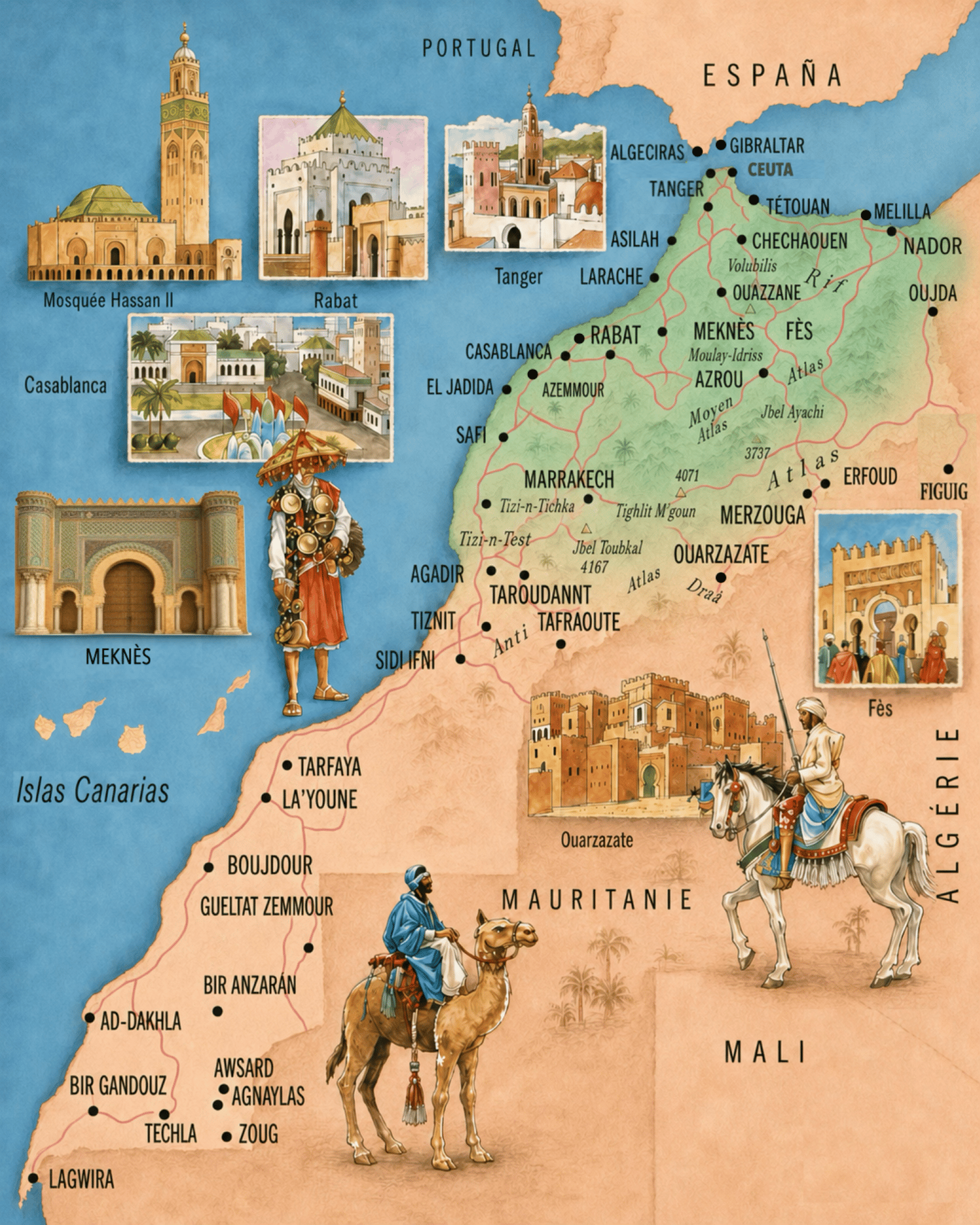
Morocco brings together Atlantic and Mediterranean coastlines, the Rif and Atlas Mountains, historic inland cities, fertile plains, oasis valleys and desert approaches. Each area has its own climate, pace and transport connections.


A distance that appears short on a map may take much longer because of mountain roads, indirect connections or the time needed to travel between smaller towns. Begin by choosing one main region, then add a second only when the route works naturally.


This approach reduces unnecessary travel and leaves more time to experience the places themselves.


When to Visit Different Parts of Morocco

SEASONS CHANGE BY REGION

Choose the Right Season for the Journey You Want

There is no single perfect time to visit every part of Morocco. Coastal cities, mountain regions, inland plains and desert approaches can experience very different conditions during the same season. The best period depends on the places you want to visit, the temperatures you are comfortable with and the kind of journey you are planning.


Atlantic & Mediterranean Coasts

Coastal areas often feel milder than inland Morocco, although wind, rain, humidity and sea conditions can still vary by season and location.


Northern Morocco & the Rif

The north can be greener and wetter than many visitors expect. Spring and autumn may offer pleasant conditions, while winter weather can affect mountain and rural travel.


Imperial & Inland Cities

Fès, Meknès, Marrakech and other inland cities can become very hot in summer and cool after sunset during colder months. Spring and autumn are often easier for long days of walking.


Atlas & Mountain Regions

Mountain weather can change quickly. Snow, rain, heat and road conditions depend on altitude, season and the exact route.


Southern Valleys & Desert Approaches

Southern Morocco can experience intense daytime heat, cold nights and large temperature differences. Early starts and realistic travel times are especially important.


Always check current local weather, road conditions and regional access shortly before travelling.


Build a Realistic Route & Decide How Long to Stay

TRAVEL LESS. EXPERIENCE MORE.

Build a Route That Leaves Time to Experience Morocco

A strong Morocco itinerary is not the one with the longest list of cities. It is the one that gives each place enough time to be understood, enjoyed and connected naturally to the next destination. Travel days should not be treated as full sightseeing days. Stations, transfers, mountain roads, traffic, check-in times and local transport can all take more time than expected.

Choose one main region, identify the places that belong naturally together and leave space for slower mornings, unexpected discoveries and changes in local conditions.


Practical Guidelines

  • Do not change accommodation every night unless the route genuinely requires it.
  • Give major historic cities enough time beyond their best-known monument.
  • Treat long travel days as part of the itinerary.
  • Add a buffer before flights, ferries or important reservations.
  • Combine smaller places only when the connections are practical.
  • Avoid crossing the country repeatedly to collect famous names.


Getting Around Morocco

CHOOSE TRANSPORT THAT FITS THE ROUTE

Move Between Places with Realistic Expectations

Morocco offers several ways to travel, but no single form of transport serves every region equally well. Major cities may be connected by train, while smaller towns, mountain areas and southern routes often require buses, taxis, transfers or a car.


Trains

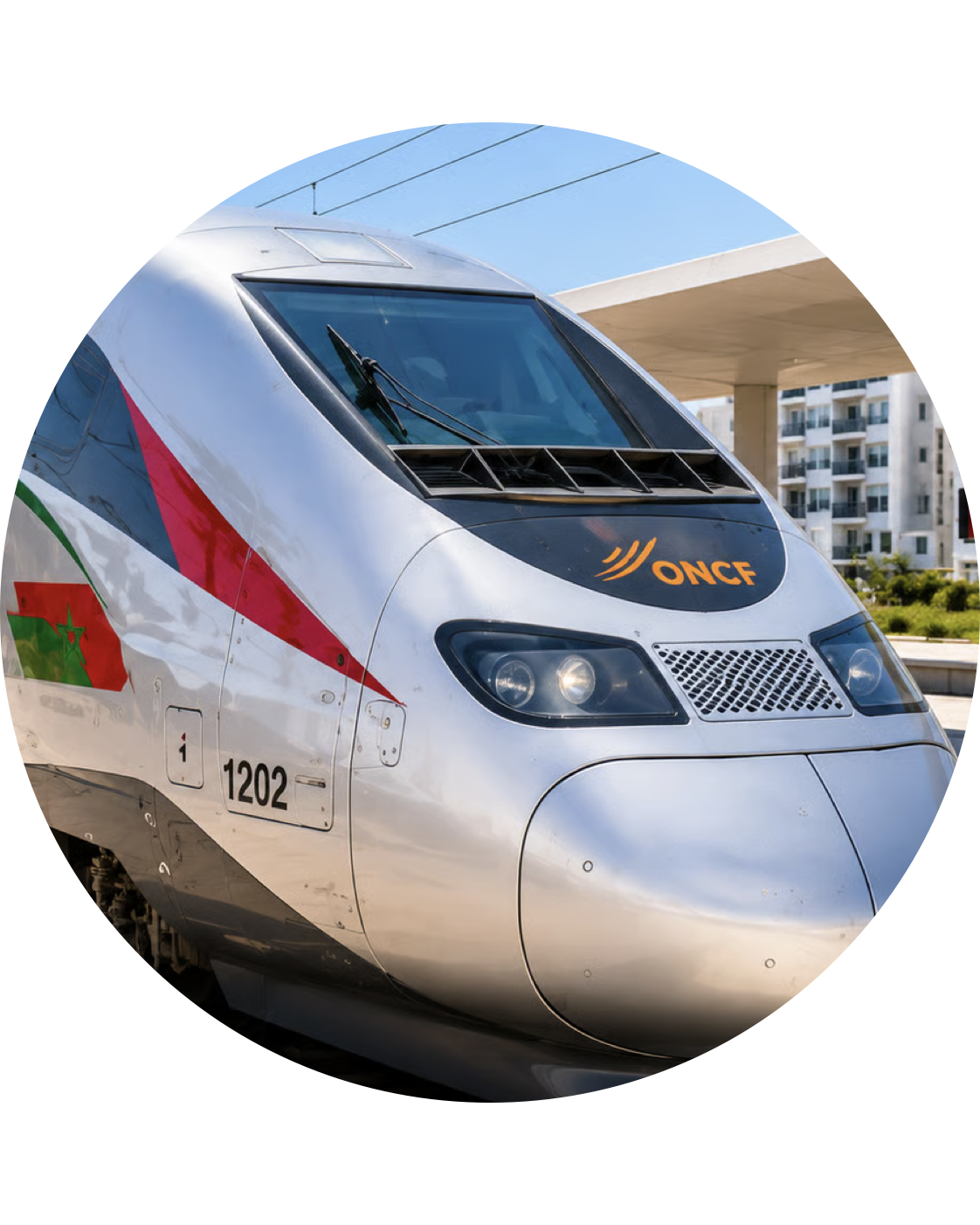
Trains can be practical for travel between several major cities and transport hubs. They are most useful when the destinations already lie on the rail network.


Intercity Buses

Long-distance buses reach many places that trains do not. Travel quality, stopping patterns and journey times can vary by route and operator.


Shared & Local Taxis

Shared taxis are widely used for regional connections, while smaller local taxis operate within many towns and cities. Local practices differ, so clarify the destination and fare arrangement before departure.


Rental Cars

A car offers flexibility for rural areas, small towns and scenic routes, but drivers should allow for unfamiliar road conditions, parking limitations, mountain roads and longer travel times.


Private Transfers

Private transfers may be useful for difficult connections, early departures, families, larger luggage or routes where public transport is limited.


Moving Within Cities

Walking is often essential inside historic medinas, while modern districts may require taxis, trams, buses or other local transport. Medina accommodation may not always be directly accessible by car.


Operators, routes, schedules, fares and booking conditions can change. Confirm current information directly with the relevant transport provider before travelling.


Choosing Where to Stay

CHOOSE THE RIGHT BASE

Stay Where It Supports the Way You Travel

The most atmospheric accommodation is not always the most practical, and the most practical location is not always the most memorable. Your ideal base depends on your luggage, mobility, transport plans, arrival time and the atmosphere you want to experience.


Historic Medina

Staying inside a medina offers atmosphere and proximity to historic streets, but access may involve walking, stairs, narrow lanes and limited vehicle access.


Traditional Riad or Guesthouse

Riads and guesthouses can offer a more intimate experience, although room sizes, stairs, sound levels and accessibility vary considerably.


Modern City District

A modern district may provide easier access to stations, roads, restaurants, lifts and larger hotels, especially for short stays or onward travel.


Coastal or Resort Area

Coastal accommodation can offer space and sea access, but it may be separated from historic centres and require additional transport.


Rural or Remote Stay

Remote accommodation may provide landscape, calm and local character, but travellers should confirm transfers, meals, road access and phone connectivity in advance.


Essential Darija for Travel

A FEW WORDS OPEN DOORS

Essential Darija for Everyday Travel

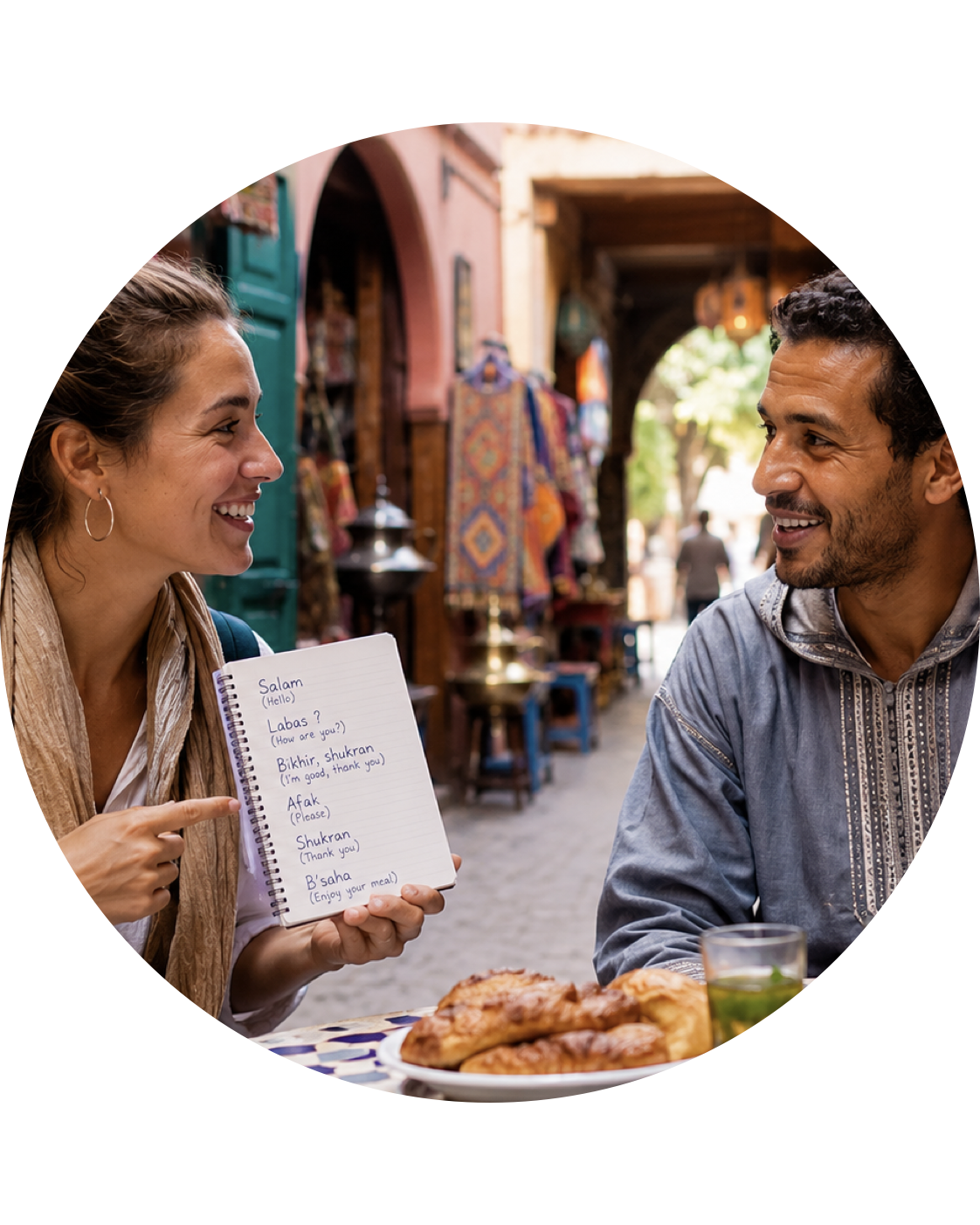
You do not need to speak Darija fluently to travel through Morocco, but a few respectful words can make everyday encounters warmer and easier. Language also varies by region, generation and situation.


Salam — Hello

Labas? — How are you? / Is everything well?

Shukran — Thank you

Afak — Please

Smah liya — Excuse me / Sorry

Bshhal? — How much?

Fin…? — Where is…?

Ma fhemtsh — I did not understand

Bghit… — I would like…

La, shukran — No, thank you

Iyyeh / Ah — Yes

Bslama — Goodbye


Darija is widely used in everyday life, while Amazigh languages, Standard Arabic, French and other languages also play important roles across Morocco.


Travel with Respect & Photography Sensitivity

TRAVEL WITH CARE

Travel with Respect. Photograph with Care.

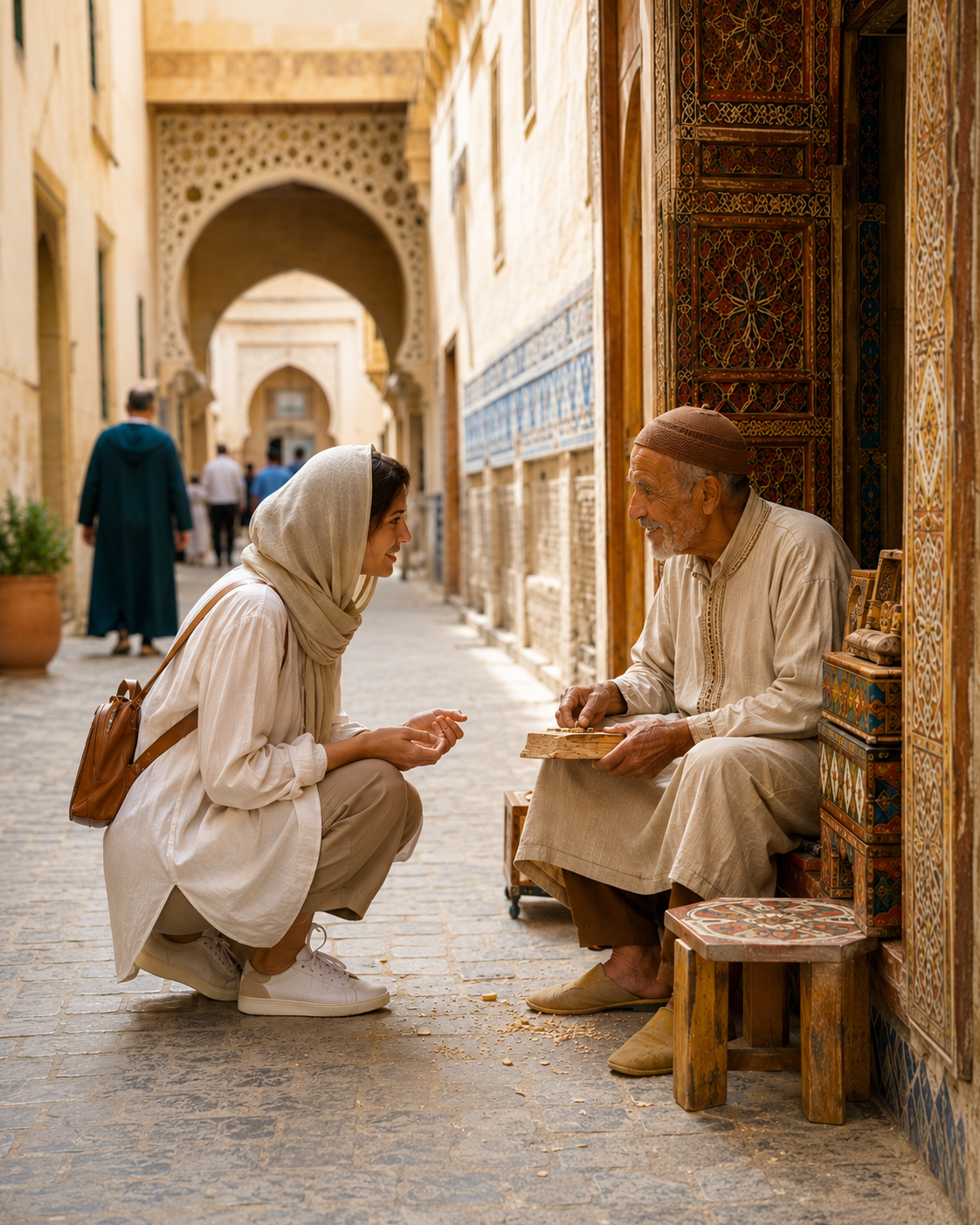
Morocco’s medinas, markets, workshops, villages and sacred places are not simply visual backdrops. They are living environments shaped by work, family, privacy, belief and daily routines.


Respectful Travel

Dress and behave with awareness of the place and situation. Respect prayer, religious spaces and private family moments. Remember that a medina street may also be someone’s neighbourhood. Ask before entering private courtyards, workshops or residential spaces. Avoid blocking narrow streets or doorways for photographs. Approach bargaining and commercial conversations respectfully.


Photography Sensitivity

Ask before taking close photographs of people. Be especially careful with children. Do not assume that an artisan wants to be filmed while working. Respect “no photography” signs and verbal requests. Avoid photographing worshippers during private religious moments. Do not treat poverty, vulnerability or private life as visual entertainment.


The strongest travel photographs are not only beautiful. They are made with consent, patience and respect for the people and places within the frame.


Money, Connectivity & Everyday Practicalities

PREPARE FOR EVERYDAY TRAVEL

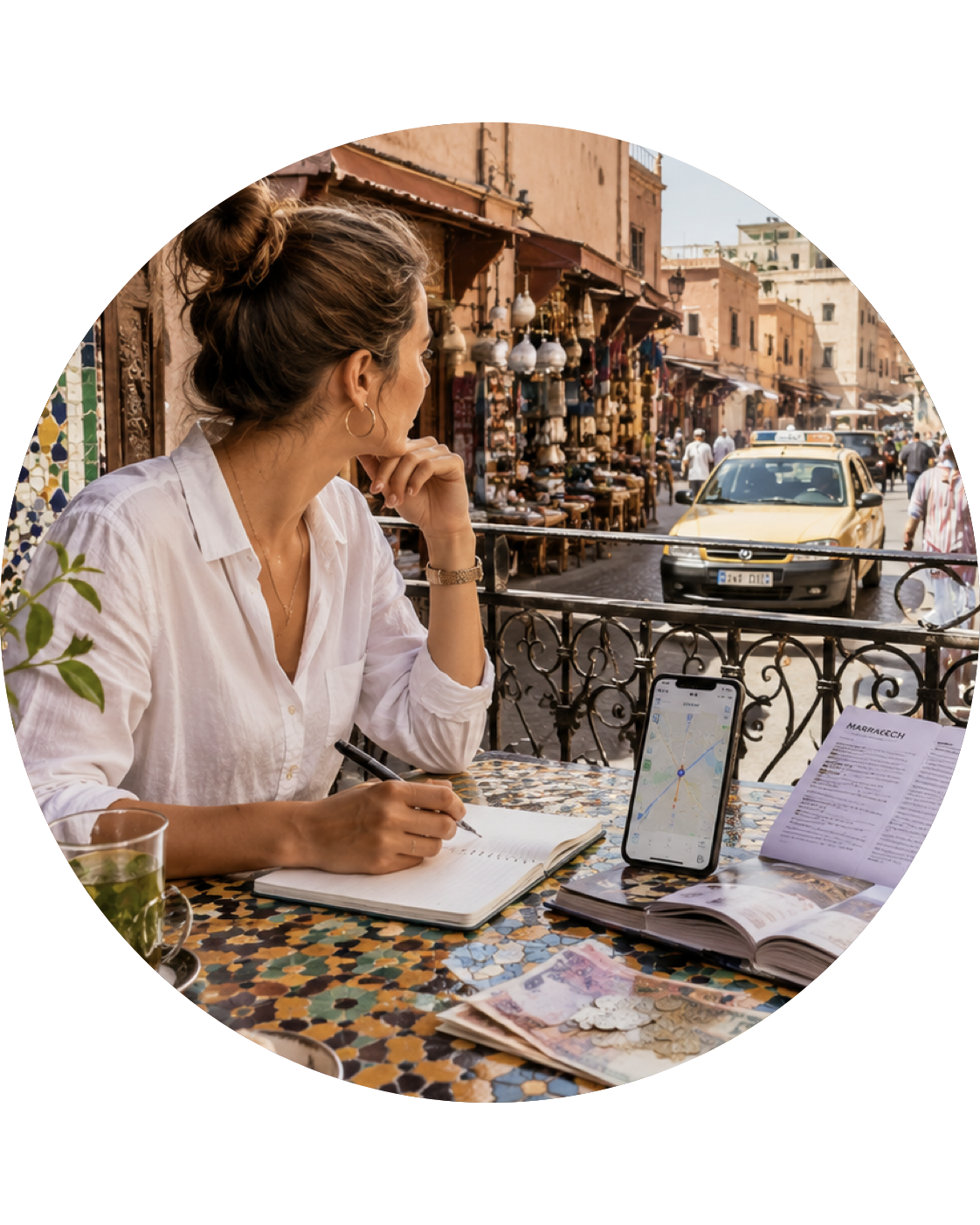
The Small Details That Shape the Journey


Money

Cash remains useful in many everyday situations, especially in smaller shops, markets, taxis and less tourist-oriented places. Card acceptance can vary, so avoid relying on one payment method alone.


Connectivity

Local SIM cards, eSIM options and hotel Wi-Fi can support navigation and communication, but coverage may be weaker in rural, mountain or desert areas.


Everyday Practicalities

  • Keep smaller cash amounts available.
  • Confirm whether taxis use a meter or an agreed fare.
  • Carry water appropriately for the season and route.
  • Keep essential medication in your hand luggage.
  • Allow for changes during public holidays and religious periods.
  • Check whether your accommodation is accessible by vehicle.
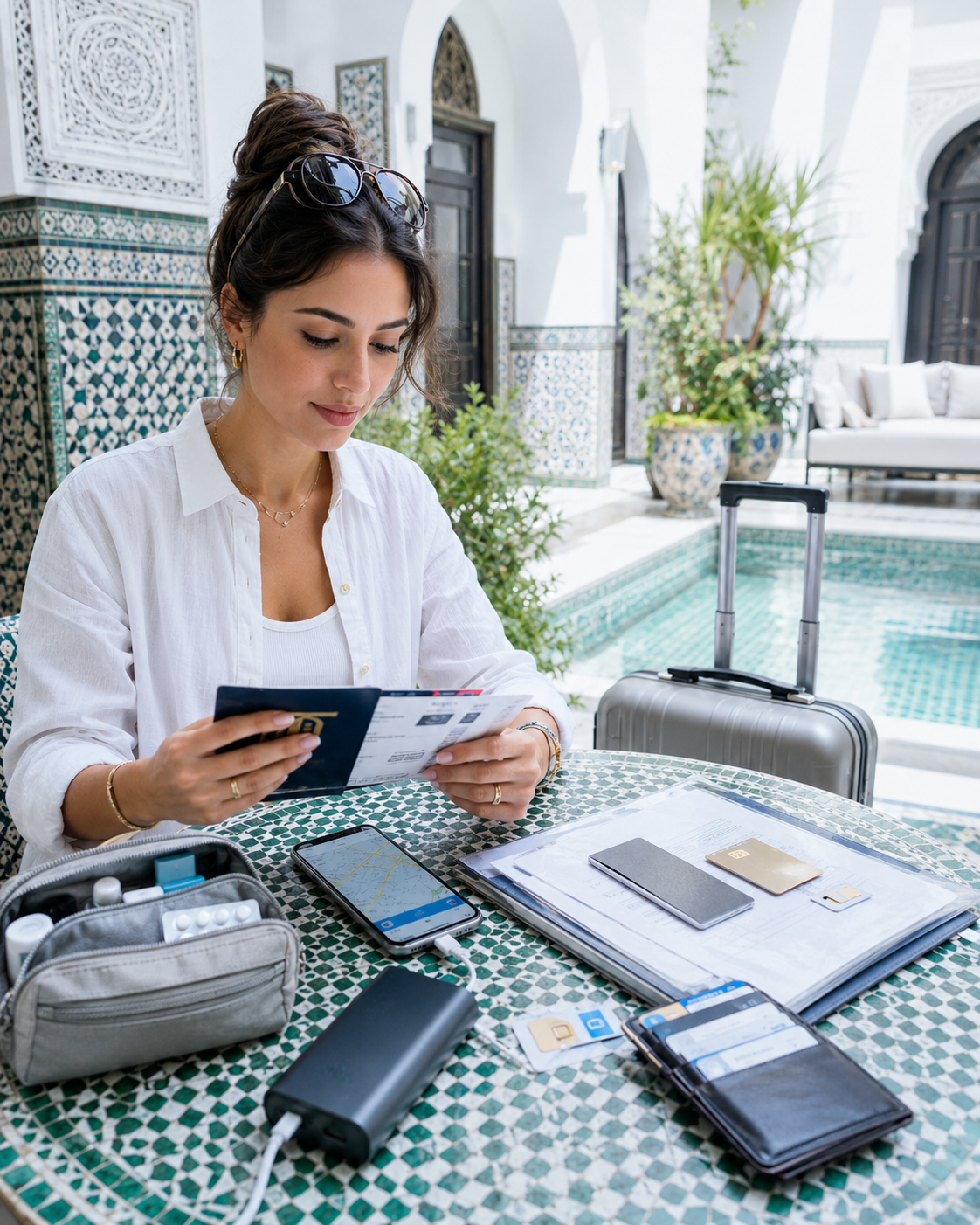
  • Carry a suitable charging adapter and portable power bank.
  • Save important addresses offline.
  • Keep copies of important travel documents.

Prices, payment practices, connectivity and local opening patterns can change. Confirm important arrangements close to the date of travel.


Practical Checks Before Travelling

CONFIRM BEFORE YOU LEAVE

What to Check Before Travelling to Morocco

Checklist

  • Passport validity
  • Current entry and visa requirements
  • Travel insurance
  • Health and medication needs
  • Flight, ferry or transport reservations
  • Weather and road conditions
  • Accommodation access and check-in arrangements
  • Opening times and monument access
  • Public holidays and religious periods
  • Emergency and support contacts
  • Mobile connectivity
  • Copies of important documents
  • Airport or station transfer arrangements
  • Cancellation conditions

Entry rules, transport schedules, prices, road conditions, opening hours and local access can change. Always confirm time-sensitive information through current official or trusted local sources before travelling.


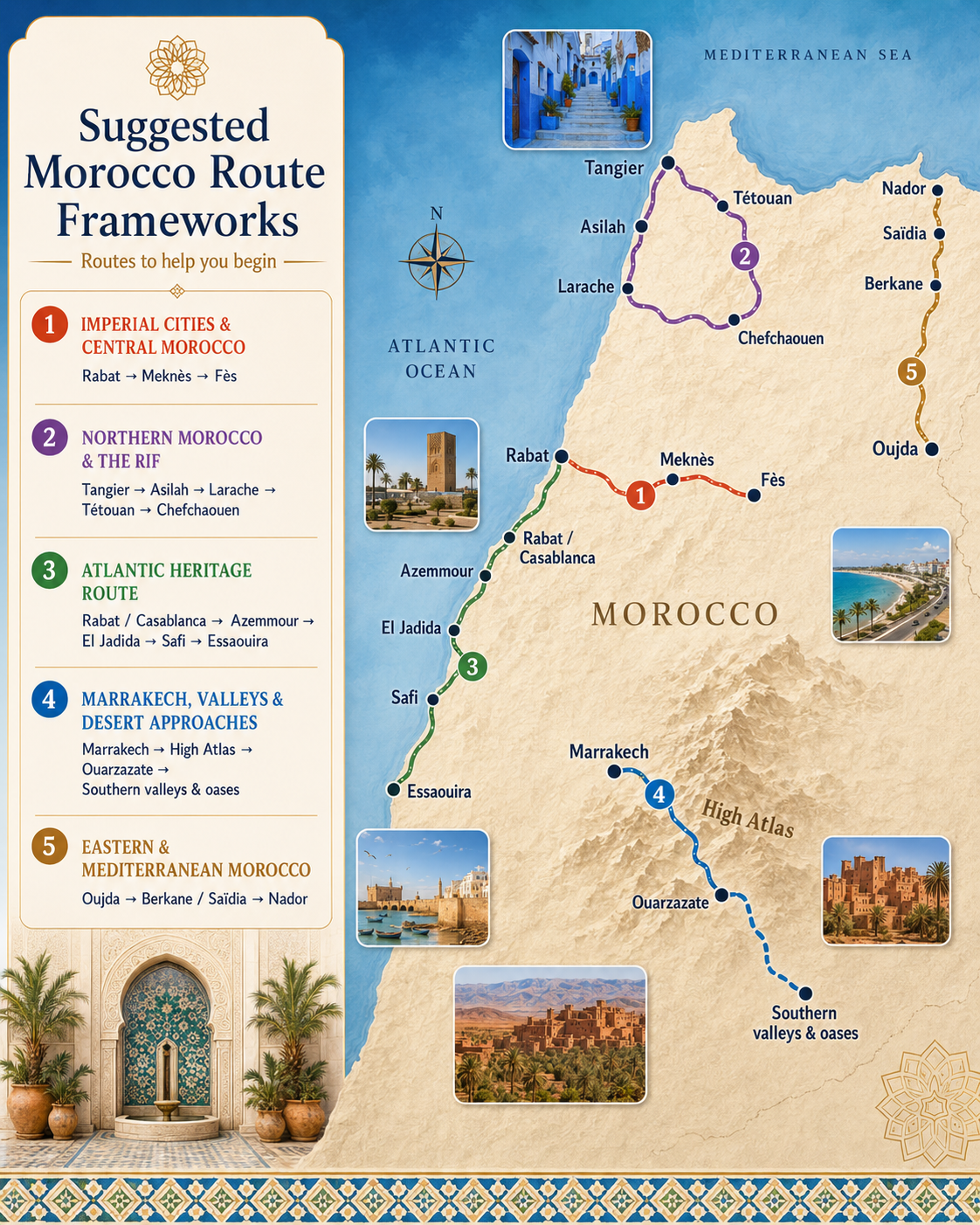
Suggested Morocco Route Frameworks

ROUTES TO HELP YOU BEGIN

Suggested Morocco Route Frameworks


The routes below are flexible starting points rather than rigid itineraries. Adjust them to your available time, travel style, transport choice and the places that matter most to you.


Route 1 — Imperial Cities & Central Morocco


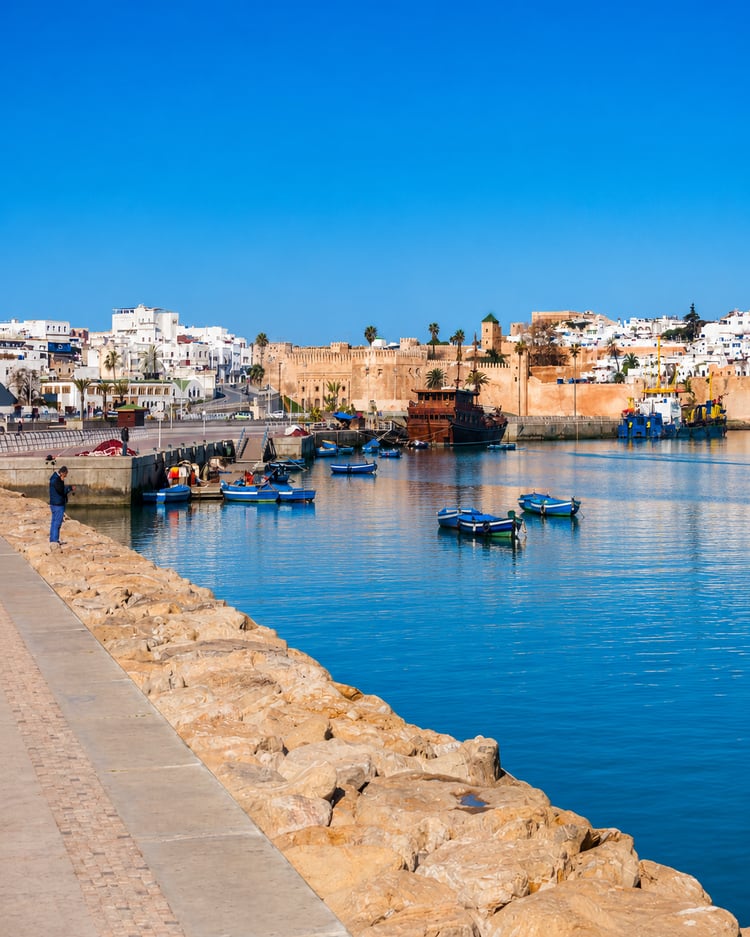
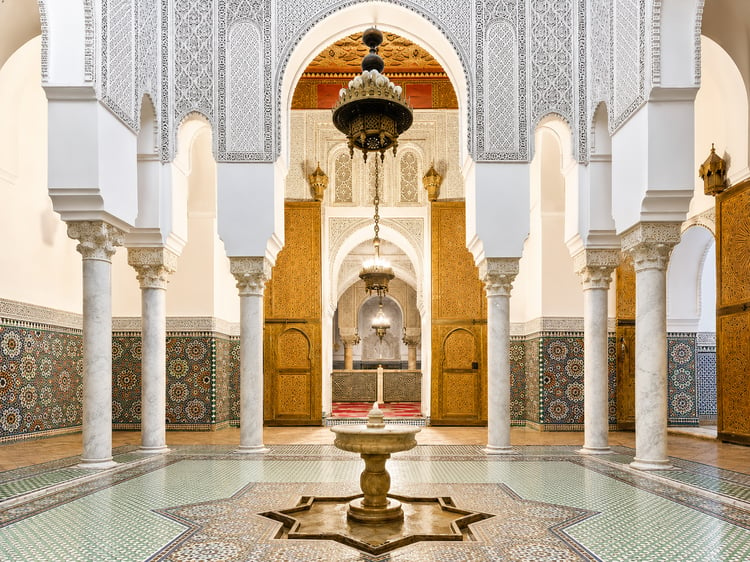
Rabat → Meknès → Fès

A strong introduction to Morocco’s royal history, historic medinas, monumental architecture and cultural institutions. This route works especially well for travellers who prefer major cities connected by established transport.


Route 2 — Northern Morocco & the Rif


Tangier → Asilah → Larache → Tétouan → Chefchaouen

A journey through Atlantic and Mediterranean identities, Andalusian heritage, mountain landscapes and distinctive northern cities. The full route requires realistic travel time and should be shortened when the number of days is limited.


Route 3 — Atlantic Heritage Route


Rabat or Casablanca → Azemmour → El Jadida → Safi → Essaouira

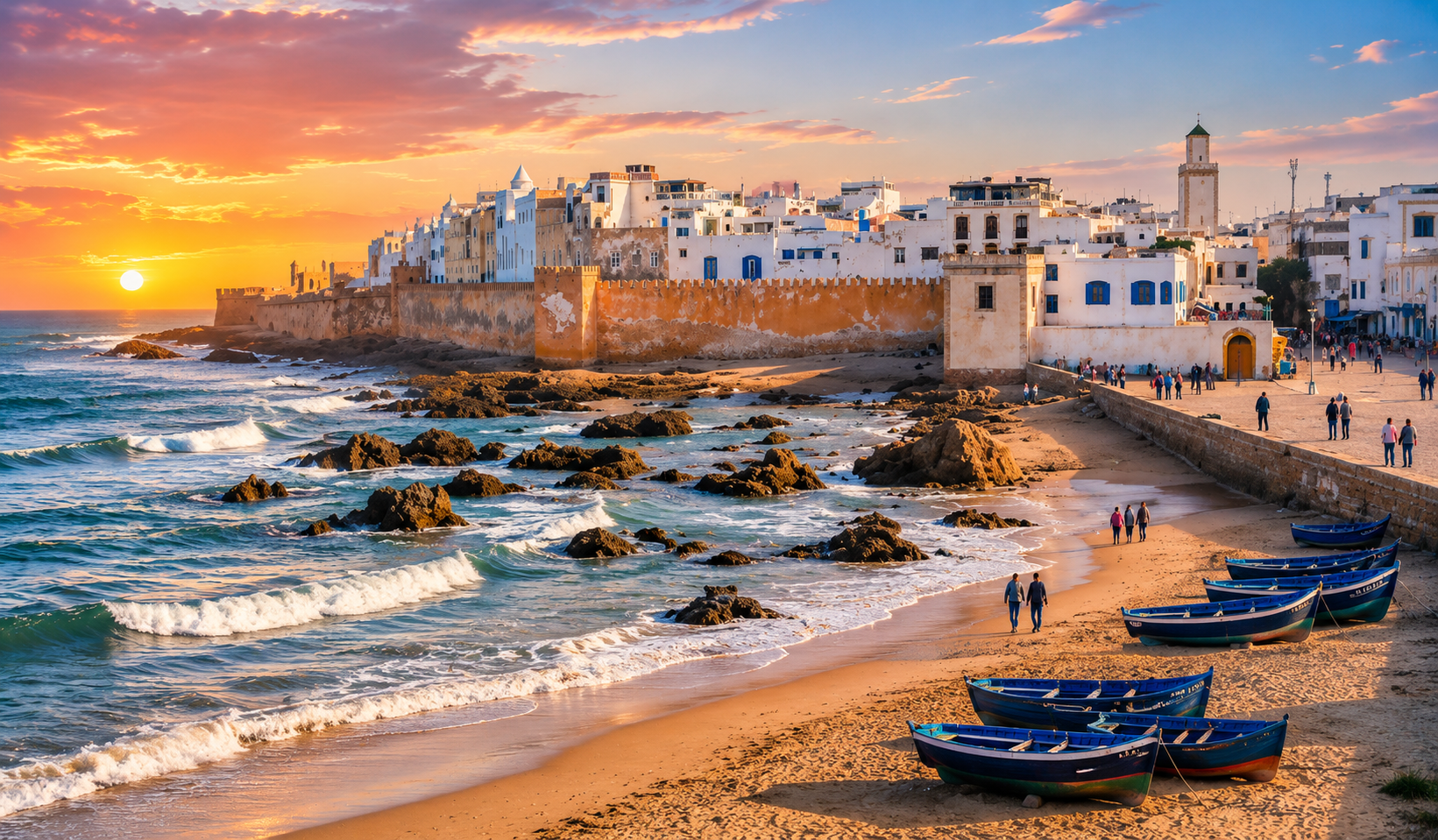
A route shaped by ports, fortified towns, Atlantic architecture, craftsmanship and maritime history. Transport connections should be checked carefully before fixing the final order.


Route 4 — Marrakech, Valleys & Desert Approaches


Marrakech → High Atlas routes → Ouarzazate → Southern valleys and oases

A journey from a major historic city into mountain passes, earthen architecture, kasbah landscapes, valleys and southern environments. Road conditions and travel times require careful planning.


Route 5 — Eastern & Mediterranean Morocco


Oujda → Berkane or Saïdia → Nador and surrounding areas

A less frequently documented route through eastern Morocco and the Mediterranean, with regional landscapes and identities that differ from the better-known central tourism circuit.

Continue Planning Your Journey

A well-planned journey begins with practical choices, but it becomes more meaningful when you also understand the places, histories and cultural details behind the route. Continue exploring Morocco through destination pages, editorial stories and premium visual city guides created to help you move from general inspiration to deeper knowledge and more confident travel planning.


  • Places

    Explore Morocco’s Places

    Discover Morocco through its imperial cities, Atlantic ports, northern medinas, mountain towns, oasis landscapes and lesser-known regional destinations. The Places library helps you understand where each destination belongs, what gives it a distinctive identity and which nearby locations can be combined into a more coherent journey.

  • Stories

    Read Stories from Morocco

    Go beyond practical travel information through stories about architecture, craftsmanship, historic places, regional identity, daily life and Morocco’s living cultural heritage. Each article adds context to the places you may visit and reveals details that are easy to overlook when a destination is reduced to a short list of attractions.


  • Premium Guides

    Browse Premium City Guides

    Explore richly designed visual guides that bring together city identity, history, landmarks, architecture, culture, local life, practical orientation and nearby highlights in one carefully structured resource. Created for travellers and Morocco lovers who want more than a basic itinerary, each guide is designed to support both journey planning and deeper discovery.